
Everything You Need to Know About Mumbai Metro Line: Map, Timings, and Fare
The blog provides a comprehensive guide to the Mumbai Metro, detailing current operational mumbai metro lines, route maps, timings, and fares. It highlights the metro's benefits, such as time savings, comfort, and eco-friendliness. Future expansions aim to cover 337 km by 2034, positioning the Mumbai Metro as a vital urban transit solution.
Contents
The Mumbai Metro Line is a cornerstone of Mumbai's public transportation system, designed to ease congestion and provide efficient connectivity across the city. Currently, the network consists of multiple operational and planned lines, each catering to different parts of the city. Whether you’re a daily commuter or a tourist, here’s all the essential information about the Mumbai metro:
Mumbai Metro: 2. Mumbai Metro Map and Route
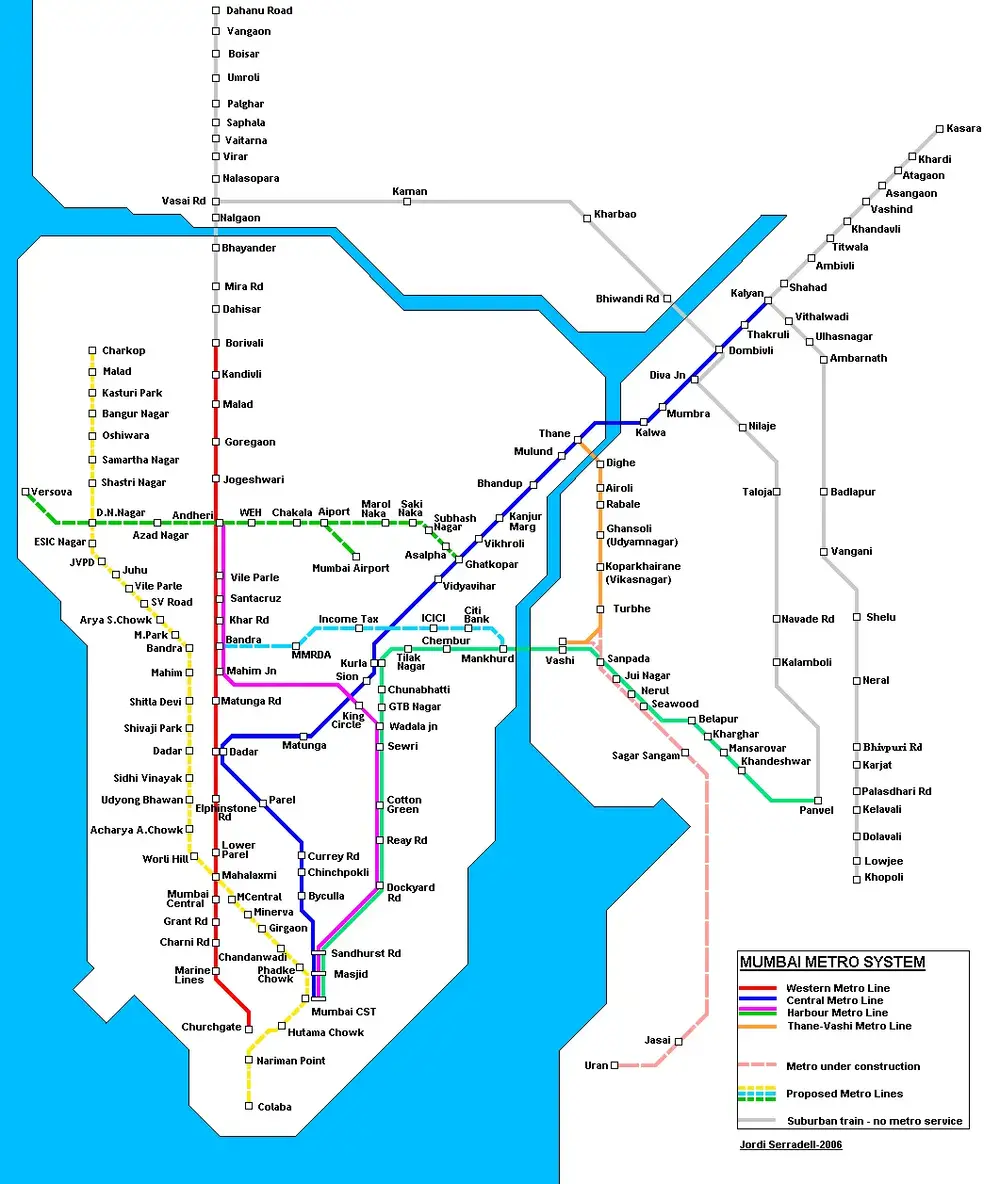
The Mumbai Metro route includes:
- Line 1 (Versova-Andheri-Ghatkopar): The first operational line connecting Mumbai's eastern and western suburbs.
- Line 2A (Dahisar East–DN Nagar) and Line 2B (DN Nagar–Mandale): Serving the western suburbs, these are key routes under the expansion project.
- Line 3 (Colaba-Bandra-SEEPZ): An underground line connecting South Mumbai to the northern suburbs is currently under construction.
- Line 7 (Dahisar East–Andheri East) and Line 9 (Dahisar East–Mira Bhayandar): Enhance connectivity in the western suburbs.
The Mumbai Metro map route is designed to cover the city comprehensively, ensuring seamless travel across Mumbai’s major residential, business, and industrial hubs.
Mumbai Metro Timings and Fare
Here’s a quick look at the metro timings in Mumbai and fare structure:
| Details | Information |
| Operating Hours | 6:00 AM to 11:00 PM (varies slightly by line and station) |
| Frequency | Every 5 - 8 minutes during peak hours; 10 - 12 minutes during non-peak hours |
| Minimum Fare | INR 10 |
| Maximum Fare | INR 50 - INR 60, depending on the route and line |
| Discount Options | Rechargeable smart cards are available for regular commuters, offering discounts on fares |
Benefits of Mumbai Metro
- Time Savings: Reduces travel time significantly compared to road transport.
- Comfort and Convenience: Air-conditioned coaches provide a comfortable commuting experience.
- Eco-Friendly: Reduces vehicular emissions by promoting public transport.
Future Expansions of Mumbai Metro
The Mumbai metro continues to evolve. Plans aim to cover 337 km across 14 lines by 2034. In 2026, the focus is on completing Line 4 (Wadala-Kasarvadavali) and its extension Line 4A, which will link Thane directly to the city’s metro grid. Additionally, Line 5 (Thane-Bhiwandi-Kalyan) is under development to further enhance the Mumbai metro route map.
The Final Word
The Mumbai Metro Line route is transforming the way Mumbai travels, offering a fast, reliable, and eco-friendly alternative to road traffic. With its expanding network, modern facilities, and affordable fare structure, the Mumbai Metro is set to become the lifeline of the city. Stay updated with the latest developments to make the most of this efficient transit system.