

Kashi Ropeway Project: All You Need to Know About
Contents
Varanasi, one of the world’s oldest living cities, is witnessing a historic upgrade with the launch of the Kashi ropeway, a revolutionary move in urban transport. Famous for its spiritual charm and narrow lanes, Varanasi has long struggled with overcrowded roads and limited space for expansion. The Varanasi ropeway is set to change that, introducing India’s first public transport ropeway in an urban setting. It’s not just about easing traffic; it’s about preserving the sanctity of the ghats while still enabling smart, modern mobility.
Kashi Ropeway Project Details
The ropeway project in Varanasi is being developed under the central government's ambitious urban transport mission, with support from the Ministry of Road Transport and Highways. The entire project will span roughly 3.8 kilometres, connecting important city points such as Varanasi Cantonment Railway Station to Godowlia Chowk. The total cost is estimated to be around INR 644 crore, with advanced cable car systems designed for safe, reliable, and efficient commuting.
This is a unique approach to solving Varanasi’s transportation puzzle, by going above it all. With minimal land acquisition and limited environmental disruption, the Varanasi ropeway project offers a smart alternative to traditional road-based infrastructure.
Kashi Ropeway Project - Major Features and Specifications
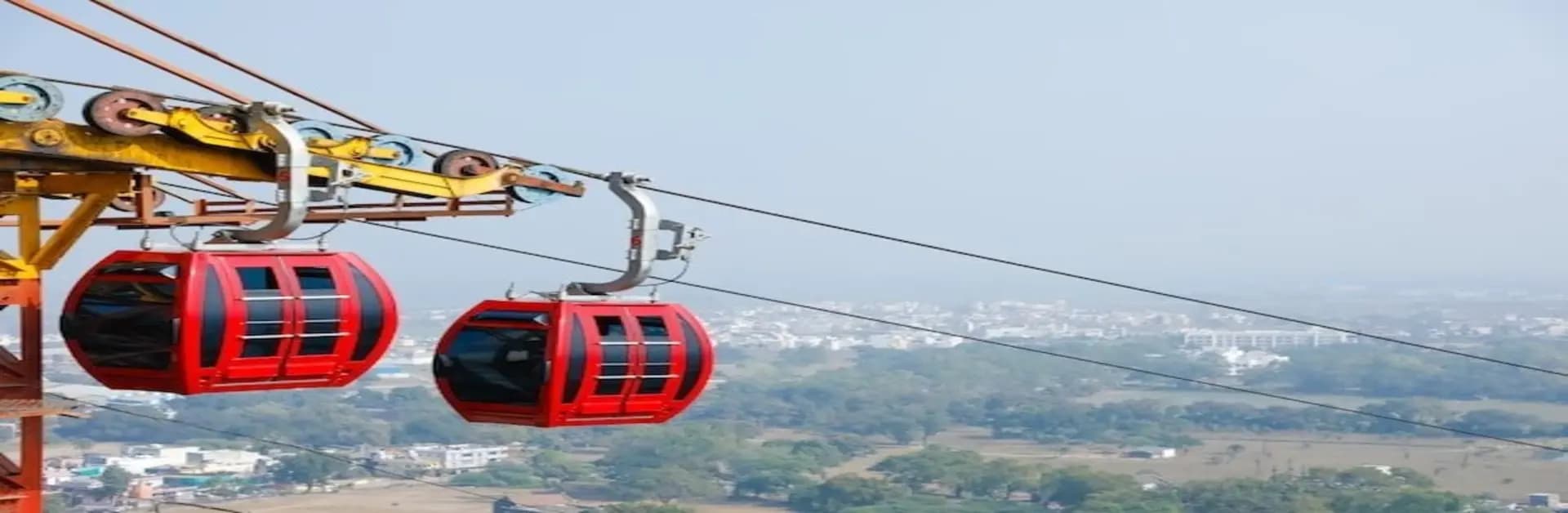
The Kashi ropeway will operate using Mono-cable Detachable Gondola (MDG) technology, known for its high safety and low maintenance. Each cable car or gondola will accommodate 8 to 10 passengers, running at an average speed of 18 to 20 km/h, with a capacity to handle nearly 3,000 passengers per hour per direction (PPHPD).
The system will be supported by tall towers that rise above the urban clutter, ensuring an uninterrupted journey. The focus is on accessibility and efficiency, the entire route will be covered in around 16 minutes, a journey that often takes 45 minutes or more by road due to heavy congestion.
Varanasi Ropeway Project - Map Details
The proposed Kashi ropeway map reveals a smartly designed alignment. Starting from Varanasi Cantt Railway Station, it will pass through key areas like Rathyatra, Girja Ghar, and Godowlia, before ending at Kashi Vishwanath Corridor, the spiritual heart of the city. This route has been carefully selected to cater to both daily commuters and pilgrims visiting the holy sites.
The elevated ropeway route ensures that no historical monuments or sacred zones are disturbed. Moreover, the Varanasi ropeway map showcases how seamlessly it connects major transit points with spiritual and tourist landmarks, bringing together convenience and culture.
Kashi Ropeway Project - Station Details
There will be five major stations on the route:
- Varanasi Cantt Railway Station (Terminal Point A)
- Rathyatra Junction
- Girja Ghar Junction
- Godowlia Chowk
- Kashi Vishwanath Corridor (Terminal Point B)
Each station will be equipped with digital information boards, escalators, lifts, ticket counters, and waiting lounges. The idea is to make these stations commuter-friendly, with facilities catering to both the elderly and the differently-abled. As the ropeway in Varanasi will also cater to tourists, signage and announcements will be available in multiple languages, including Hindi and English.
Kashi Ropeway Project - Technology
What makes the Varanasi ropeway stand out is the use of cutting-edge ropeway technology that’s already in use in countries like Switzerland, France, and Japan. The MDG system ensures that cabins can be detached at stations for easy boarding while the cable keeps moving, maintaining a smooth flow of passengers.
The ropeway is being built by National Highways Logistics Management Limited (NHLML) in collaboration with international consultants and engineers. Safety is paramount, cabin speed, wind resistance, emergency evacuation systems, and seismic resilience have all been taken into account in the planning.
Connectivity Upgrades with the Varanasi Ropeway Project
The ropeway project in Varanasi isn’t just about air travel over the city. It’s also designed to work in tandem with ground transport, autos, e-rickshaws, and city buses will be integrated into the system at various junctions. The ropeway aims to create a multi-modal urban transport system that’s smart, seamless, and user-friendly.
For pilgrims, this is a game-changer. Areas like Godowlia and Kashi Vishwanath Corridor, which are normally choked with crowds, will now be easier to access. The project also eases pressure on congested roads, reducing travel time and environmental impact.
As for the Varanasi ropeway ticket price, it’s expected to be nominal and comparable to local metro fares, making it accessible to all. Final pricing is yet to be officially declared, but a range of INR 50 - INR 100 is being considered for a full journey.
The Kashi ropeway is more than just a transport project; it’s a bold step into the future of urban mobility in India’s oldest spiritual capital. With its blend of innovation, heritage sensitivity, and commuter convenience, the Varanasi ropeway project could set a national benchmark.
From its thoughtfully designed route to world-class technology and cultural awareness, this ropeway in Varanasi stands as a testament to how India can modernise while staying rooted in its spiritual and historical ethos. As the system nears completion, one thing is clear: the sky is no longer the limit for Kashi.