

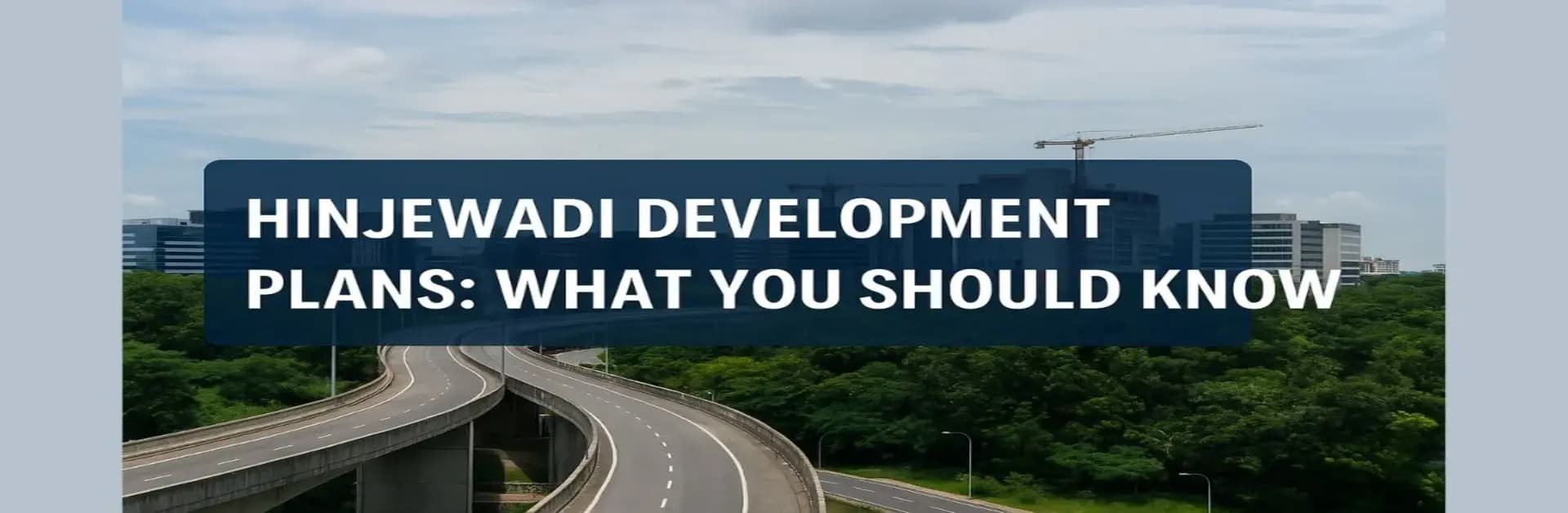
Hinjewadi Infrastructure Development Plan: Hinjewadi Phases
3.7K
Explore the latest Hinjewadi development plan, including infrastructure upgrades, metro integration, and road connectivity. Learn how Hinjewadi phases are shaping Pune’s growing IT hub and what’s planned for future expansion.
Contents
Hinjewadi Phases
Hinjewadi has been developed to foster employment opportunities, with Phase I and Phase II already completed and Phase III in partial development, with ongoing work. Phase IV is sanctioned and currently under acquisition and development. The current situation reflects high land rates in the real estate market, shaping the Hinjewadi development plan.
PMRDA Skyway
PMRDA is set to construct a skyway connecting the Hinjewadi Metro Station with the IT Park. This skyway will efficiently link the metro station to various companies in Hinjewadi, providing a convenient and quick commute for metro travellers. The plan includes the development of a 2.5 km test track in the initial phase, starting from the Hinjewadi Phase II circle and extending to Mannara Technologies via the MIDC hill service reservoir, marking one of the key upcoming projects in Hinjewadi.
Major Road Development Plan
The Pimpri-Chinchwad Municipal Corporation (PCMC) has approved the construction of approximately 34 km of roads in the "B" and "D" wards, investing Rs. 450 to 500 crores. This ambitious project aims to enhance connectivity between Pimpri-Chinchwad and the rural regions of Maval, as well as Pune airport to Hinjewadi, aligning with the broader Hinjewadi future plan.
This upcoming infrastructure development Plan in Hinjewadi aims to establish permanent communication facilities and streamline traffic to and from key areas, including the Hinjewadi IT Park. The project also includes adding service roads along the Mumbai-Bangalore highway and constructing a new bridge over the Pavana River, further improving regional accessibility through Hinjewadi upcoming projects.
Multi-Modal Integration Plan for Pune Metro
The Pune Metropolitan Region Development Authority plans to execute a multi-modal integration (MMI) plan for all 23 stations along the elevated Hinjewadi-Shivaji Nagar Metro corridor. This initiative follows the successful model employed by its Mumbai counterpart. As Pune Metro Line 3 begins operations by April 2025, PMRDA is also focusing on improving infrastructure and connectivity, aiming to provide commuters with a seamless experience.
Also read: Revolutionising Pune Metro and its Impact on Real Estate
The Final Word
As an IT hub, Hinjewadi's expansion is backed by continuous phases, abundant available land, and strategic initiatives. The PMRDA skyway, PCMC's significant road development plan, and the multi-modal integration plan for Pune Metro collectively emphasise the dedication to improving connectivity, aiming to provide commuters with a seamless experience that will significantly impact Hinjewadi real estate.