

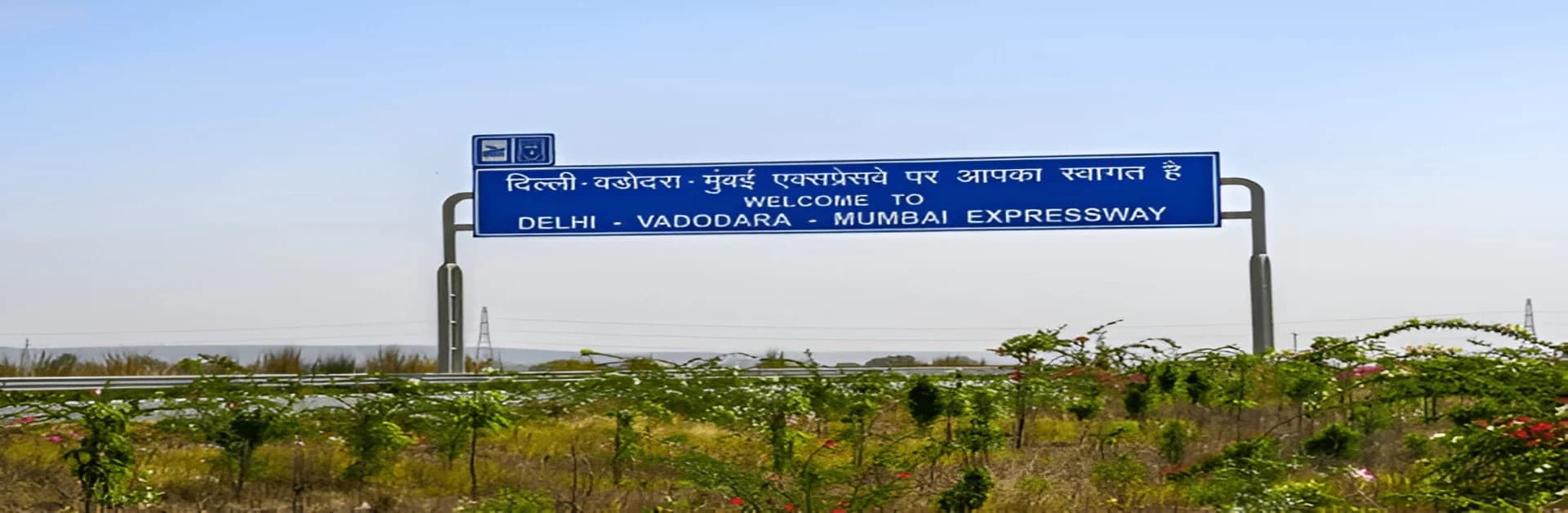
Everything You Need to Know About the Delhi Mumbai Expressway: Route, Map, and Completion Date
The Delhi Mumbai Expressway is a 1,386 km, eight-lane highway connecting six states, reducing travel time from 24 to 12 hours. Expected to complete by 2026, it boosts connectivity, supports electric vehicles, and promotes economic growth. Phased openings since 2023 are easing traffic and enhancing regional development.
Contents
- Delhi Mumbai Expressway Route
- Delhi Mumbai Expressway Route Map
- Delhi Mumbai Expressway Completion Date
- Benefits of the Delhi Mumbai Expressway
- Real Estate & Corridor Effects
- Land Price Appreciation Along Route
- Emerging Growth Zones & Investment Hotspots
- Industrial/Logistics Parks & Economic Nodes
- Impact on Cities, Towns Along the Corridor
- Travel Time, Distance, Fuel Savings
- The Final Word
The Delhi Mumbai Expressway is one of India’s most ambitious infrastructure projects, designed to significantly reduce travel time between the two major cities. This eight-lane expressway spans multiple states, improving connectivity and economic growth. With an estimated cost of over ₹1 lakh crore, it aims to revolutionise road transport. Understanding the Delhi Mumbai expressway route map, progress, and expected completion timeline is crucial for travellers and businesses alike.
Delhi Mumbai Expressway Route
The Mumbai Delhi expressway route covers approximately 1,386 km, passing through six states: Delhi, Haryana, Rajasthan, Madhya Pradesh, Gujarat, and Maharashtra. Major cities along the route include:
- Delhi: Starting point near Sohna, Haryana
- Jaipur, Rajasthan: Key junction for North India connectivity
- Kota, Rajasthan: Major transit hub
- Ratlam, Madhya Pradesh: Enhances central connectivity
- Vadodara, Gujarat: Strengthens industrial linkages
- Mumbai, Maharashtra: Ending point near Jawaharlal Nehru Port Trust (JNPT)
This expressway is designed to reduce Delhi-Mumbai travel time from 24 hours to just 12 hours, benefiting logistics and passenger transport.
Delhi Mumbai Expressway Route Map
The Delhi Mumbai expressway route map follows an advanced alignment to decongest existing highways. For those navigating the southern end, the Mumbai Delhi expressway Mumbai starting point is located at Jawaharlal Nehru Port (JNPT) in the Navi Mumbai region, extending toward Virar. Key features of the Delhi Mumbai expressway map include:
- Eight-lane expandable design
- Greenfield alignment to bypass traffic-prone areas
- Dedicated corridors for electric vehicles
- Smart traffic management systems
The expressway also integrates with the Golden Quadrilateral, further enhancing connectivity.
Delhi Mumbai Expressway Completion Date
The Delhi Mumbai Expressway completion date is set for 2026, with phased openings from 2023 onward. Key milestones include:
- Sohna-Dausa stretch: Operational in early 2023
- Dausa-Vadodara segment: Expected by 2024
- Vadodara-Mumbai section: Final completion by 2026
As of now, several stretches have already been opened, improving regional travel times and economic prospects.
Benefits of the Delhi Mumbai Expressway
- Faster connectivity: Cuts travel time by 50%
- Economic growth: Boosts industrial hubs along the corridor
- Sustainability: Incorporates green energy and electric vehicle lanes
- Decongestion: Reduces load on NH-48 and existing routes
Real Estate & Corridor Effects
Land Price Appreciation Along Route
The Delhi Mumbai expressway is already creating ripples in land markets. Villages and towns near interchanges have seen land prices rise steadily. Areas in Haryana near Sohna, districts in Rajasthan like Alwar and Dausa, and belts around Vadodara in Gujarat are showing visible appreciation. Investors are looking at both residential and industrial plots as long-term assets.
Emerging Growth Zones & Investment Hotspots
The Rajasthan stretch is seeing strong activity around Jaipur, Dausa, and Kota, where developers are launching housing projects. In Gujarat, Vadodara and Bharuch are emerging as new hubs, thanks to the direct link with industrial belts. These pockets are turning into investment hotspots as the Delhi Mumbai expressway route opens them to wider connectivity.
Industrial/Logistics Parks & Economic Nodes
The expressway corridor has been planned with logistics in mind. Large-scale warehousing zones, dry ports, and industrial parks are being mapped along the route. This will help reduce transportation time for goods and support the Delhi Mumbai Industrial Corridor (DMIC). Sectors like textiles, auto parts, and chemicals are expected to benefit greatly.
Impact on Cities, Towns Along the Corridor
Cities like Gurgaon, Alwar, Dausa, Ratlam, and Vadodara will experience strong urban growth as businesses and migrants move closer to the corridor. Smaller towns along the highway will see better infrastructure, new job centres, and stronger demand for housing.
Travel Time, Distance, Fuel Savings
One of the biggest advantages of the Delhi Mumbai Expressway is travel efficiency. The distance between Delhi and Mumbai has been reduced from about 1,450 km to 1,386 km. Travel time has been cut from 24 hours to nearly 12 hours for passenger vehicles. This also means big savings in fuel and maintenance costs. For logistics firms, the shorter, high-speed route could reduce freight expenses by up to 15 per cent.
The Final Word
The Delhi Mumbai Expressway is set to redefine long-distance travel in India. With a well-planned Delhi Mumbai expressway route map and an expected completion date of 2026, this project promises seamless connectivity and economic growth. As construction progresses, this modern infrastructure will significantly benefit commuters, businesses, and logistics sectors.